Port & Dockside Structure Maintenance
Ports don’t pause for maintenance — tide, traffic and weather keep moving, and access is often the limiting factor. Raven Rope Access provides rope access support for port and dockside structure maintenance, giving close, controlled access to splash-zone steelwork, berth furniture and high/awkward details without turning the job into a scaffolding programme. We help you identify defects early, complete targeted remedials, and leave a clear record your engineering team can act on.
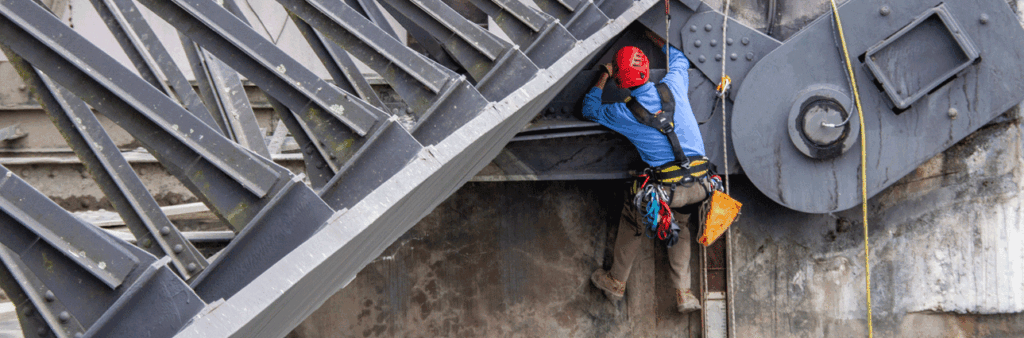
Inspection-led dockside maintenance delivered with minimal disruption.
Harbour structures take a beating in the splash zone — coatings fail at edges, brackets corrode, and access points loosen. We provide close inspection and targeted repairs by rope access, planned around berth activity and your PTW/SIMOPS controls to keep disruption to a minimum.
Dockside structures tend to deteriorate in the same places: splash-zone brackets and secondary steel, ladder runs and landings, fixings that loosen under vibration, edge protection that takes impacts, and coating breakdown that starts at seams, corners and weld details. Left alone, those “small” issues become operational headaches — restrictions, emergency call-outs and repair scopes that grow legs.
Our approach is practical and methodical. We agree the workfronts, get close access where it matters, and document condition clearly before completing the sensible remedials that protect the asset: local surface preparation and coating repairs, replacement or reinstatement of fittings where specified, and minor repairs to access steelwork and fixtures within scope. Rope access is particularly effective on over-water faces, tight voids, and congested quayside zones where conventional access is slow, expensive, or clashes with ongoing operations.
Work is delivered under permit controls with tidy exclusion zones and straightforward coordination around SIMOPS. You receive a clean close-out: what was accessed, what was repaired, what remains, and what should be monitored or programmed next.
Typical tasks
- Close visual condition checks with photo reporting and defect capture
- Local surface preparation and coating repairs (splash zone, brackets, edges and interfaces)
- Corrosion management on secondary steelwork and awkward details
- Repairs/reinstatement support for ladders, handrails, gates, grilles and access points (as specified)
- Checks and minor remedials to platforms, catwalks, stair towers and landings
- Condition checks to fixings, guards, signage, and high-level fixtures
- Snag/punch-list close-out ahead of inspections, audits or seasonal weather windows
Assets & locations
- Quay walls, berth faces and over-water structures (where rope access is suitable)
- Fender lines, brackets and protective steelwork around impact zones
- Dolphins, mooring points and access ladders/landings
- Access towers, stairways, walkways, service platforms and gantries
- Linkspans, rampside structures and ferry berths (as scoped and coordinated)
- Harbour walls and navigation-associated structures in the immediate port area
Planning, safety & control
Dockside maintenance is high-consequence work in busy areas, so we keep the set-up calm and controlled. Planning accounts for berth operations, vehicle/pedestrian routes, tidal constraints and restricted zones. Exclusion areas are practical, tool control is disciplined, and communications stay simple so work can run alongside port activity without creating new problems. The result is maintenance delivered safely — and documented clearly for your records.
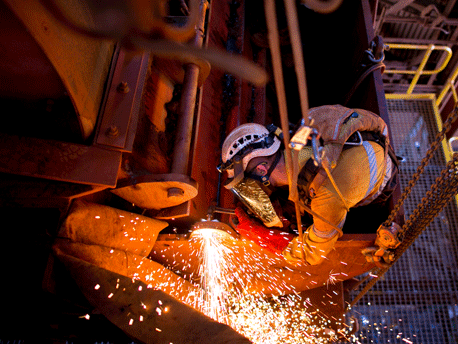
Berth & Quayside Maintenance Support
If you’ve got recurring defects, splash-zone corrosion, damaged access points or a snag list that needs closing without disrupting operations, we can support with inspection-led maintenance planned around berth activity and permit controls. We’ll agree the workfronts, sequence the job around live interfaces, and provide a clear close-out showing what was addressed, what remains, and what should be programmed next.