Crane, Derrick & Lifting Gear Inspections
Cranes and lifting systems don’t fail politely — they show small warning signs first, and those signs are usually high up where access is awkward. We provide rope access support for crane, derrick and lifting gear inspections so close visual checks and condition observations can be completed efficiently without tying up the berth with scaffold. Whether you’re preparing for a planned inspection, supporting a competent person, or closing out defects, we help you get clear evidence and a practical list of next actions.
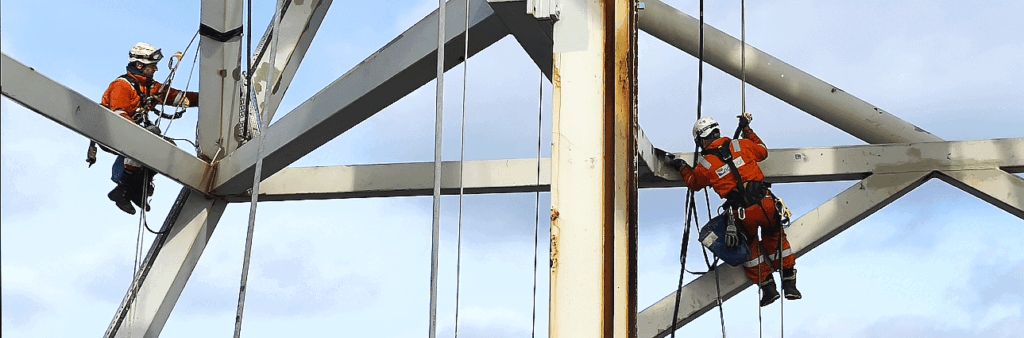
Inspection access that’s controlled, efficient and easy to action.
We provide rope access support for close-up inspection and maintenance of cranes, derricks and lifting arrangements on marine and industrial assets. Typical scope includes booms and jibs, masts, slew rings, sheaves, wire ropes, hooks, spreader beams and man-riding equipment, with clear photo records and defect notes where required. Access routes are planned to keep the area controlled and safe, reducing the need for large scaffold builds and minimising disruption to operations.
Marine and dockside lifting environments are hard on equipment — salt, vibration, heavy cycles and impacts accelerate wear and coating breakdown. The early issues often hide in places teams rarely reach: boom heads, sheaves, pins, hook blocks, pendants, boom foot areas, ladder runs, platforms, slew ring zones, pipework supports and high-level handrails around the crane house.
Our role is straightforward: create safe access, get close to the details, and document condition clearly. We set practical exclusion zones, coordinate with operations around lifts and live work areas, and work methodically through agreed inspection points so nothing important is missed. We can support planned inspection programmes and LOLER-related checks where you have an appointed competent person/inspection provider in place, providing photo-backed notes, clear location referencing and measurements where useful so your engineering or lifting team can act without guesswork.
Where issues are found, we can also support minor remedials around access steelwork, fittings and associated structures within scope — or help you define the repair/NDT requirements for the appropriate specialist.
Typical tasks
- Close visual inspection support of booms, jibs, derricks and crane houses
- Sheaves, pins, hook blocks, swivels and load-path components (visual condition checks)
- Wire rope condition observations (corrosion, broken wires, deformation, lubrication state)
- Inspection access to ladders, platforms, handrails, walkways and landing points
- Condition checks of brackets, fixings, guards and secondary steelwork around the crane
- Photo reporting, defect capture and snag/close-out tracking
- Supporting competent persons with access during thorough examinations (where appointed)
Assets & locations
- Port cranes, dockside jib cranes and quay installations (where rope access is suitable)
- Ship’s cranes, davits and lifting points on vessels alongside
- Derricks, A-frames and lifting beams on marine plant and workboats
- RO-RO terminals, ferry berths and cargo handling structures
- Crane towers, access stairways, platforms and high-level service areas
- Structure lifting points and pad-eyes (as specified / client scope)
Planning, compliance & safety
Lifting environments are high-consequence, so we keep the set-up calm and controlled. The scope, no-go zones and inspection points are agreed up front, and we coordinate with your lifting team and permit office around live operations, SIMOPS and dropped-object controls. Rope access is delivered as a complete system with two-rope protection and a workable rescue plan, and tool control is kept disciplined so inspection work can proceed safely in busy areas. You receive a practical output: what was inspected, what was observed, and what should be addressed or monitored next — presented clearly to support your maintenance planning and formal inspection processes.
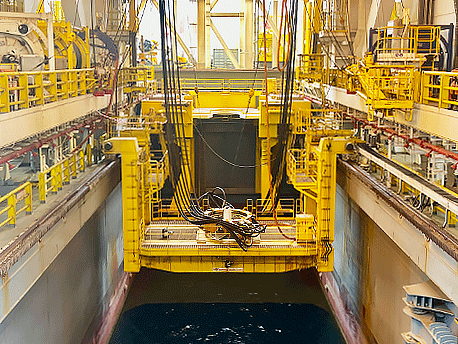
Arrange crane & lifting gear inspection
If you’ve got a planned inspection coming up — or you need to confirm condition after heavy use, weather damage or a reported defect — we can support with safe access and a clear set of inspection notes quickly. Share the asset type, location, working height, restricted areas and whether a competent person is attending, and we’ll come back with a practical access plan that fits your programme.