Marine Rope Access Rescue & Standby Cover
Marine environments add complexity to work at height — wind, over-water exposure, restricted access routes and busy operational interfaces. Where rope access is being used, rescue provision isn’t optional; it’s part of the system of work. We provide marine rope access rescue and standby cover, supporting projects with competent personnel, practical rescue planning and calm site control so operations can proceed with confidence.
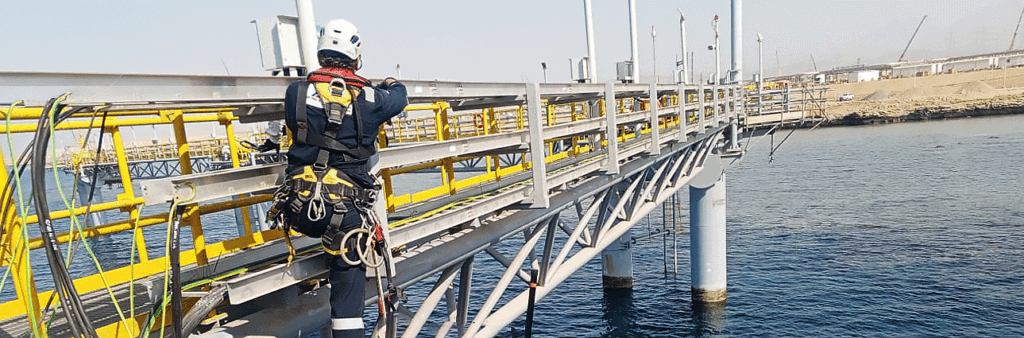
Competent standby cover for rope access work in high-consequence locations.
When crews are working aloft or over water, the rescue provision needs to be real, rehearsed and immediately available — not a box-tick. We provide dedicated standby cover for marine rope access, with a site-specific recovery plan agreed before the shift and a rescue technician positioned to respond without delay. From quayside painting and inspection to tank entry and crane work, we coordinate closely with the vessel/terminal team so recovery actions, communications and evacuation routes are clear if something goes wrong.
Standby cover is about more than “being on site”. It’s understanding the workfront, the hazards, the access routes and the likely rescue scenarios — then ensuring the people, equipment and communications are in place before the first technician leaves the deck. In marine settings, those details matter: tide states, over-water exposure, restricted egress and simultaneous operations can quickly turn a minor incident into a major delay if rescue arrangements are vague.
We provide rescue standby support for rope access operations on vessels alongside and on dockside structures, integrating with the principal contractor and permit system. Our team supports the planning stage (rescue approach, anchor/route considerations, interface controls), remains ready throughout the work, and keeps communications simple and controlled. Where required, we can also support recovery drills, toolbox talks and rescue readiness checks so the system remains credible and site-specific — not generic paperwork.
Typical tasks
- Rope access standby cover for planned works (vessels alongside / dockside structures)
- Rescue plan input aligned to the workfront, access routes and site constraints
- Rescue equipment readiness checks and practical staging of recovery kit
- Support to pre-job briefings, toolbox talks and interface controls (as agreed)
- On-shift monitoring of changing conditions: weather, tide, SIMOPS and exclusion zones
- Rescue drills / readiness exercises where required by the client or principal contractor
- Post-shift close-out notes and recommendations for ongoing controls (where useful)
Assets & locations
- Vessel works alongside (superstructure, masts, funnels and high-level features)
- Quayside structures, access towers, ladders, platforms and over-water faces
- Coastal and port environments with restricted access and live operations
- Refurbishment and shutdown programmes with multiple workfronts and permits
- Sites where rapid emergency response capability is required on the workfront
- Locations where access and egress routes are limited or exposed
Planning, safety & environmental control
Rescue standby is delivered under a clear safe system of work with agreed communications, practical exclusion zones and disciplined tool control. In line with rope access good practice, rescue arrangements are planned before work starts and kept immediately workable for the specific structure and work method, not treated as a generic add-on. Marine variables — wind, tide, over-water interfaces and SIMOPS — are built into the plan so the standby function remains effective throughout the shift.
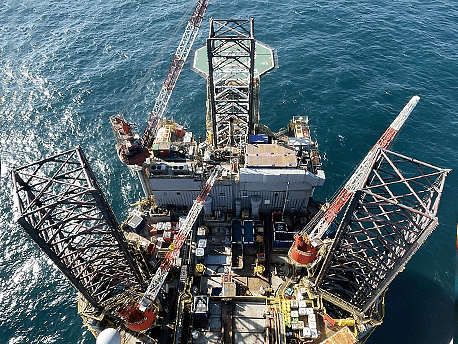
Arrange marine rescue standby cover
If you have rope access operations planned in a port or over-water environment and need competent rescue standby cover integrated with your permits and site controls, we can help. Share the location, work scope, durations, access constraints and SIMOPS interfaces — and we’ll propose a standby arrangement that matches the risk profile and programme.