Confined Space NDT & Structural Inspections
Confined space integrity work is rarely limited by the inspection method — it’s limited by access, visibility and control. We support structural inspections and NDT activities inside tanks, vessels and enclosed plant, creating stable inspection conditions and safe access so competent inspection providers can obtain reliable results. The outcome is practical: clear defect locations, usable records, and evidence that supports repair scope, integrity decisions and planned re-entry.
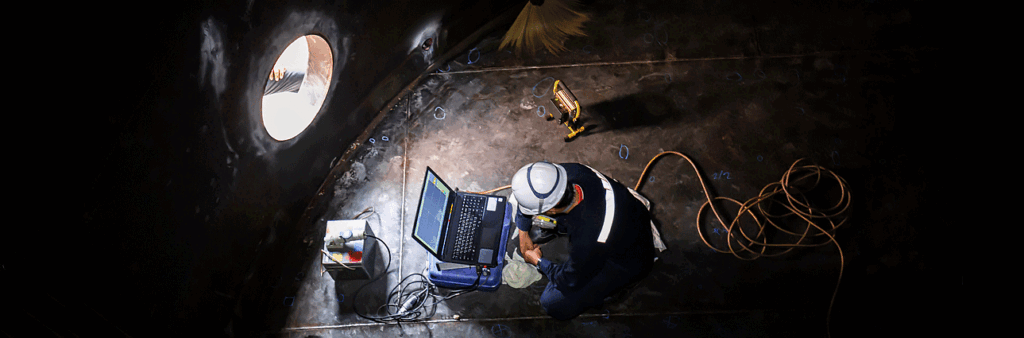
Reliable inspection support inside tanks, vessels and enclosed plant
We deliver NDT support and close structural inspections inside confined spaces where the critical details live — welds, nozzles, supports, stiffeners and corrosion-prone internals. Access is planned to reach the right zones safely, then findings are recorded clearly with photo references, locations and practical recommendations so you can prioritise repairs and move forward with confidence.
Inside a confined space, the detail matters. Poor lighting hides pitting and cracking, uncontrolled disturbance of residues ruins visibility, and rushed access leads to missed zones or unrepeatable measurements. We set the work up as an inspection environment first: ventilation positioned to keep conditions steady, lighting that shows surface profile properly, and a methodical sequence that allows inspection points to be found again and compared over time.
We support structural inspection and NDT programmes by providing safe access and disciplined work positioning to the areas that drive integrity risk — weld toes and attachments, stiffeners, nozzles, support interfaces, low points, water traps and corrosion hot-spots. Where NDT is required, we work alongside your appointed NDT technician/inspection provider, assisting with positioning and access so examinations can be carried out correctly and efficiently. Non-destructive testing covers a range of methods (for example visual, ultrasonic, magnetic particle and penetrant testing) used to assess flaws and condition without damaging the component.
All work is delivered under confined space controls aligned to your permit-to-work system, including entry control, communications and emergency arrangements that are in place before entry begins. HSE guidance is clear that you should not rely on the emergency services alone and that suitable arrangements must be in place for rescue.
Typical tasks
- Confined space visual structural inspections (systematic, zone-by-zone)
- Access support for NDT technicians (safe positioning and set-up)
- Ultrasonic thickness gauging support: point identification, marking and repeatable location recording
- Weld, bracket, stiffener and attachment checks (corrosion patterns, cracking indicators, distortion)
- Dimensional checks and targeted measurements where required by scope/standard
- Pre-repair and post-repair inspection support and close-out evidence
- Structured reporting: locations, priorities, and practical next actions
Assets & locations
- Storage tanks, pressure vessels and process vessels
- Columns, separators, scrubbers and ductwork sections
- Pipe bridges, valve pits and large pipework chambers (where man-entry is required)
- Sumps, pits, interceptors and restricted plant voids
- Silos, hoppers and enclosed conveyors (where applicable and controlled)
- Shutdown/refurbishment environments with tight access windows
Planning, permits & safety
Inspection work is planned around the confined space safe system of work so conditions remain stable enough to trust the results. We align with your permit-to-work requirements and entry control arrangements (including the entry controller/top person function where applicable), then coordinate ventilation, atmospheric monitoring, communications and defined emergency arrangements before entry begins. City & Guilds 6160 qualifications explicitly cover roles such as entrants and entry controllers/top persons, reflecting how entry and control are managed on real sites. We sequence the work to minimise disturbance, keep the workfront tidy, and manage SIMOPS through practical exclusion zones and tool control. Close-out is traceable: what was accessed, what was inspected, what was found, and what should be monitored or addressed next.
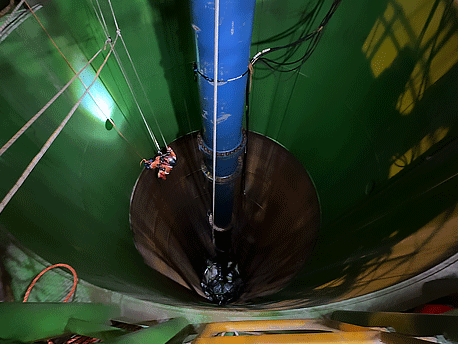
Arrange confined space inspection and NDT access support
If you have an inspection window approaching — planned shutdown, turnaround, or condition concern — we can support with controlled confined space access and inspection-ready set-up. We’ll align to your permit system and inspection scope, then provide clear records that help your team and your inspection provider make confident decisions on repairs, monitoring and re-entry.