Confined Space Risk Assessment & Safe Systems of Work
Confined space work is only as safe as the system behind it. We produce confined space risk assessments and safe systems of work that are built for real delivery: clear roles, defined controls, credible emergency arrangements and practical sequencing that suits the space and the task. Whether you’re planning routine entries or preparing for a shutdown window, we help you turn “requirements” into a workable plan your team can follow with confidence.
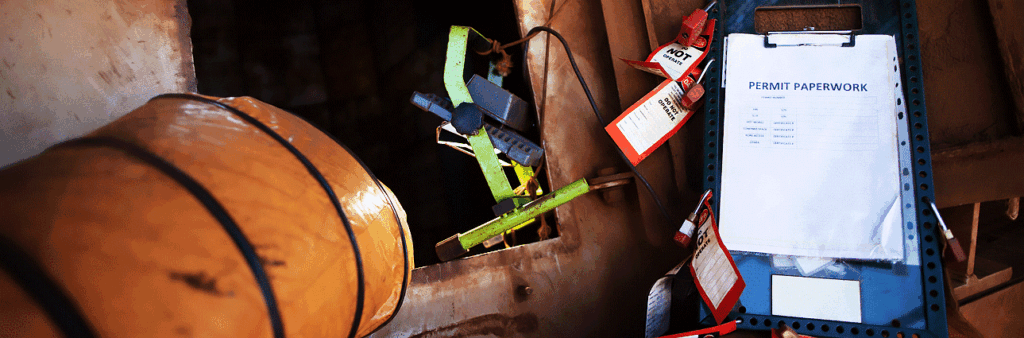
Assessment-led planning, permit-ready documentation, credible control.
A confined space RAMS pack only helps if it’s practical and task-specific. We identify the real hazards — atmospheric change, residues, engulfment, isolation and mechanical movement, restricted access, slips/trips, dropped objects, heat stress and SIMOPS — then build controls that teams can follow on the job. The outcome is a safe system of work that supports delivery, not paperwork that slows everything down.
A confined space risk assessment should do more than list hazards. It should decide whether entry is necessary at all, define what “safe to start” looks like, and set realistic controls that remain effective when conditions change. HSE guidance emphasises avoiding entry where possible; where entry is unavoidable, work must follow a safe system and include adequate emergency arrangements.
Our approach is structured and task-led. We identify the specific hazards of the space (atmospheric risk, water ingress, engulfment, energy sources, restricted access/egress, contamination), then build the safe system around the work method: isolations, entry control, communications, monitoring routines, ventilation strategy, rescue provision, SIMOPS interfaces and stop-work thresholds. We also align the roles and responsibilities to recognised confined space role structures, including entrants and entry controllers/top persons, and where planning and management input is required, City & Guilds 6160 includes Level 4 for those who plan and manage confined space work. City & Guilds+1
The output is practical: a clear sequence your team can follow, documentation that supports your PTW process, and a system that remains credible throughout the entry—not just at the point of issue.
Typical tasks
- Confined space assessment and task-specific risk assessment (hazards → controls → residual risk)
- Safe system of work / method statement aligned to the entry plan
- Roles and responsibilities (entrant, entry controller/top person, supervisor, rescue)
- Isolation and reinstatement steps aligned to site rules
- Atmospheric testing and monitoring routines, ventilation approach, comms plan
- Emergency arrangements and rescue plan that matches the space (not assumed)
- Permit interface notes: briefings, handovers, SIMOPS and stop-work criteria
Assets & locations
- Tanks, vessels, columns and enclosed plant internals
- Wet wells, sumps, pits, chambers and interceptors
- Manholes, sewers and utility shafts
- Culverts, tunnels and large-diameter pipelines (where man-entry is required)
- Valve pits, service corridors and restricted plant rooms
- Shutdown/turnaround environments with multiple permits and workfronts
Planning, permits & safety
Planning is centred on maintaining control for the full duration of the entry. We align the safe system to your PTW requirements, define pre-entry conditions and continuation criteria, and make sure emergency arrangements are in place before work starts—HSE guidance is explicit that you cannot rely on the emergency services alone to meet the Regulations. We then build a practical working system around entry control, communications, monitoring discipline, ventilation effectiveness at working level, and clear stop-work thresholds if conditions drift. Where SIMOPS exist, we define interfaces, exclusion zones and handover points so the surface environment stays stable and the entry remains defensible.
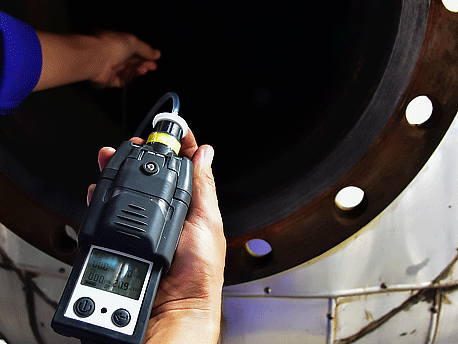
Arrange confined space risk assessment & safe system support
If you have confined space entries planned and want the risk assessment and safe system to be robust, practical and audit-ready, we can support with task-specific documentation aligned to your permits and site rules. We’ll define roles, controls and emergency arrangements in a way that supports safe delivery on the day—and a clean compliance record afterwards.