Cladding Installation & Repairs
Damaged cladding and failed interfaces don’t just look rough — they let water in, accelerate corrosion, and create loose-component risk in exposed elevations. We deliver rope access cladding installation and repairs to industrial and commercial buildings, providing close working access to panels, flashings, fixings and seals without the disruption of full scaffold builds. The focus is practical: safe access, tidy workmanship, and a clear record of what was repaired and what should be monitored.
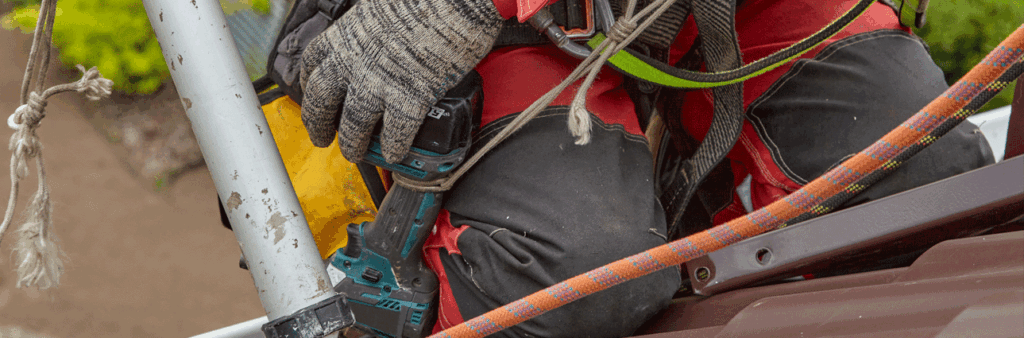
Reliable façade repairs where access is the constraint
We install and repair metal sheet and composite cladding systems where access is difficult and weather-tightness is critical. Typical problem areas include corners and abutments, eaves and ridges, parapets, penetrations, rooflights and around doors or roller shutters — anywhere movement, corrosion or failed sealants can let water in. Rope access allows targeted fixes and detail work without excessive access equipment or disruption below.
Cladding systems usually fail at details: loose fasteners, distorted sheets, damaged corners, split seals, degraded mastic lines, poorly performing laps, and fixings that become corrosion points. These issues often sit on ribs, around penetrations, at eaves lines and corners — exactly where MEWPs struggle and where scaffold can be disproportionate to a small repair scope.
Rope access allows our technicians to work directly at the defect location, keep workfronts tight, and complete repairs in short, controlled visits. IRATA describes rope access as a safe method of working at height where ropes and associated equipment are used to gain access to and from the work position and be supported there. We plan and deliver rope access as a complete system of work, aligned to IRATA good practice and the IRATA International Code of Practice (ICOP) principles for the safe supervision of rope access operations.
Where installation work is required (new sections, replacement sheets/panels or trims), we work to the agreed system details and sequencing so interfaces remain weather-tight and the finished line looks right. Where repairs are the priority, we keep the output simple and useful: what was found, what was secured/replaced, and what needs follow-on attention.
Typical tasks
- Replacement of damaged sheets/panels in localised areas (within agreed system scope)
- Repair of loose edges, laps, corners, trims and flashings
- Fixing inspections and replacement/retightening where appropriate (system-dependent)
- Local sealing and mastic works to joints, penetrations and problem interfaces
- Remedials around eaves, ridges, corners, parapets and transition details
- Make-safe actions for loose components pending full replacement works
- Photo-backed defect notes and close-out reporting
Assets & locations
- Industrial units, warehouses and distribution centres
- Factories, process buildings and plant enclosures
- Composite panels, profiled sheeting and architectural metal cladding
- Rainscreen-style elevations (repair/support works to agreed details)
- High-level façades above live operations, vehicle routes or public areas
- Coastal/exposed sites where wind loading and salt accelerate deterioration
Planning, permits & safety
Cladding works are planned with practical exclusion zones and disciplined dropped-object control, because fixings, tools and removed components present real risk below. Rope access is delivered under IRATA good practice, using the principle of double protection (working line plus safety line) and a site-specific rescue plan that remains workable as the workfront moves. Edge management and rope protection are treated as core controls, not optional extras, particularly at roof lines and sheet edges. Where the scope interfaces with other trades (roofing, M&E penetrations, lifting operations), we coordinate sequencing and SIMOPS so repairs can be completed without conflict.

Arrange cladding repairs by rope access
If you have cladding defects, loose components, water ingress points or replacement sections to install at height, we can support with a controlled rope access approach that keeps disruption low and the outcome clear. We’ll agree the system area, priorities and interfaces up front, then deliver tidy workmanship and a straightforward close-out record for your maintenance file.