Jetty, Pier, Harbour & Breakwater Maintenance
Coastal structures take constant punishment from tide, impact and weather — and access is often the reason defects linger. We provide rope access support for jetty, pier, harbour and breakwater maintenance, helping clients inspect, record and address deterioration in awkward over-water locations without turning a small scope into a major access build.
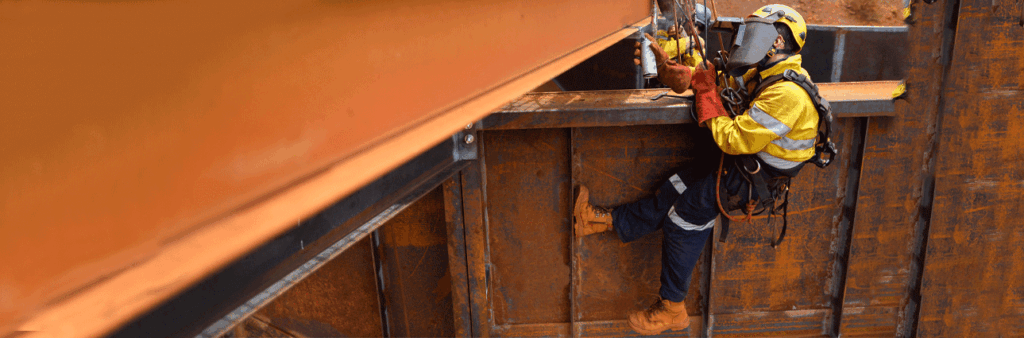
Over-water maintenance access that keeps coastal assets serviceable.
Jetties, piers and harbour structures take the worst of the marine environment — impact, abrasion and corrosion in the splash zone. We carry out close inspections and targeted maintenance including minor repairs, coating touch-ups and replacement of damaged fittings such as ladders, fenders and mooring hardware. Access is planned around tides and berth operations, and we can integrate smoothly with divers and other specialist contractors when needed.
Marine structures degrade in predictable ways: corrosion at splash-zone steelwork, cracked or spalled concrete at edges, loose fixings, damaged ladders and landings, and coating failures at seams and weld details. Add impacts from fenders and marine traffic, plus constant wetting and drying, and small defects can quickly become access restrictions or safety concerns.
Our role is to provide safe access and steady progress. Rope access allows technicians to work directly on faces that are difficult to reach from the deck, from the land side, or from plant — particularly where water levels, restricted laydown, or sensitive environments make conventional access impractical. We work through agreed zones, capture clear defect information, and carry out sensible remedials within scope — making safe loose components, supporting local steelwork/coating attention, and assisting with repair preparation so specialist teams can step in efficiently where required.
Typical tasks
- Close visual inspections with photo reporting and defect registers
- Condition checks of splash-zone steelwork, brackets, ladders, landings and edge protection
- Local surface preparation and protective coating repairs (where specified)
- Minor repairs/make-safe works to fittings, guards, signage and access fixtures (within scope)
- Concrete edge condition observations: cracks, spalls, exposed rebar indicators (reporting/support)
- Snag-list close-out ahead of planned works, audits or seasonal weather windows
- Assistance with repair preparation: access for surveys, measurements and scope definition
Assets & locations
- Jetties, piers and harbour walls
- Breakwaters and exposed coastal structures (where access is suitable and permitted)
- Slipways, access ladders, landings and over-water faces
- Fender lines, impact zones and marine plant interfaces
- Navigation-associated structures in the immediate harbour area
- Tight access sites with restricted plant movement and limited laydown areas
Keeping works safe & controlled
Over-water work adds extra variables — tide, swell, wind and limited escape routes — so planning is deliberate and site-specific. We agree access routes, rescue arrangements, exclusion zones and permit controls before work starts, and coordinate around SIMOPS so the job can run without disrupting harbour activity. Tool control and falling-object precautions are kept disciplined, and reporting is issued in a consistent format so your engineering team can prioritise repairs and plan follow-on work with confidence.

Arrange coastal structure maintenance support
If you’re dealing with splash-zone corrosion, damaged access points, loose fixtures or recurring defects on jetties, piers or harbour structures, we can support with inspection-led maintenance using rope access. Share the structure type, location, over-water constraints, access restrictions and your preferred window — and we’ll propose a practical approach that fits operations and weather/tide realities.