Lighthouse Maintenance
Lighthouses sit where the weather hits first — salt spray, wind-driven rain and constant exposure punish coatings, metalwork, glazing and masonry. We deliver lighthouse maintenance by rope access, helping owners and managing authorities keep structures safe, presentable and serviceable without heavy access builds. From routine upkeep to targeted repairs, we work carefully around sensitive heritage fabric and operational requirements.
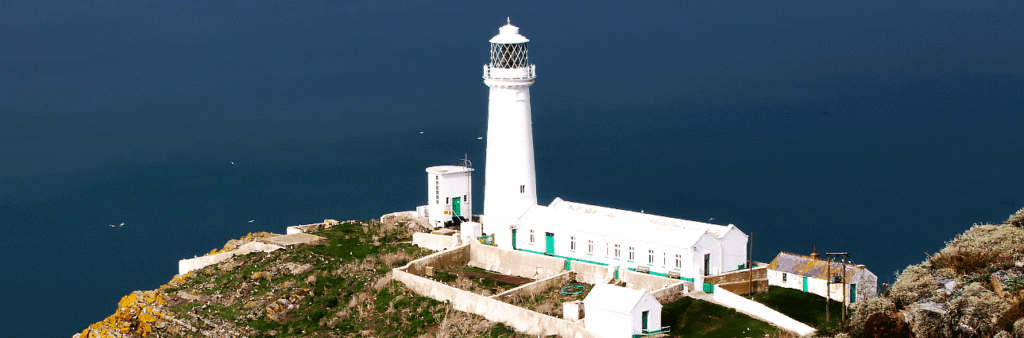
Sensitive upkeep for exposed coastal structures — delivered with minimal disruption.
Lighthouses take constant punishment from salt, wind and wave action — masonry joints open up, steelwork corrodes, glazing leaks and access ladders wear out. We carry out close visual inspections and targeted maintenance across the full structure, from foundations and rock landings to lantern rooms, galleries, brackets and aerial/solar frames. The aim is simple: keep the light reliable, control corrosion and water ingress, and extend the working life of these critical (and often historic) navigational assets.
Lighthouse maintenance is rarely one “big job”. It’s a collection of persistent details: corrosion starting at fixings and seams, water tracking at joints, failing sealant around glazing, degraded handrails and ladders, flaking coatings on galleries and lantern housings, and minor masonry defects that widen over time. Left unchecked, those small issues become access restrictions, safety concerns, and expensive remedial scopes.
Our approach is methodical and proportionate. We agree priorities, then work through defined zones to inspect, record and address defects in a way that suits the structure and the environment. Rope access allows technicians to work directly on the tower face, gallery levels and high features where conventional access would be slow, intrusive, or impractical. Where specialist trades are required (heritage masonry, glazing systems, electrical/lantern systems), we can support with safe working positions and clear handover notes so the right repairs happen in the right order.
Typical tasks
- Close visual checks with photo records and clear defect locations
- Local surface preparation and coating repairs to steelwork, galleries and handrails
- Cleaning and upkeep of lantern glazing and external glass (as scoped/allowed)
- Minor repairs to ladders, platforms, gates and access fixtures (within scope)
- Sealant/joint inspections around glazing interfaces and water ingress points
- Masonry condition observations: cracks, open joints, spalls and weathered edges (reporting/support)
- Safe removal/make-safe of loose items and minor snag-list close-out
Assets & locations
- Lighthouse towers, lantern rooms and gallery levels
- Coastal navigation structures and associated service areas
- Access ladders, landings, rail lines, gates and perimeter barriers
- Exposed rock sites and over-water faces where access footprint must stay small
- Heritage and listed assets requiring careful methods and restrained intervention
- Remote locations with limited laydown and tight operational windows
Planning, reporting & safety
Coastal work needs deliberate planning. We account for wind, tide/swell, sea-state limitations, access routes and emergency arrangements before work begins. Exclusion zones are set to protect the public and the structure below, and tool control is kept disciplined to reduce drop risk in high-consequence locations. Where heritage constraints apply, methods are selected to protect the substrate and avoid unnecessary disturbance, and handovers are documented clearly so follow-on works can be planned without ambiguity.
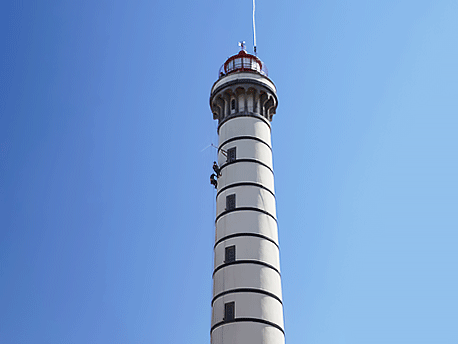
Plan lighthouse maintenance support
IIf you’re managing a lighthouse or coastal navigation asset and need routine upkeep, defect close-out or targeted repairs in difficult-to-access areas, we can help you build a practical plan that fits the site constraints. Share the location, structure type, priorities, access restrictions and preferred window — and we’ll come back with a sensible sequence and support recommendation.