Pipeline, Culvert, Tunnel Inspection & Maintenance
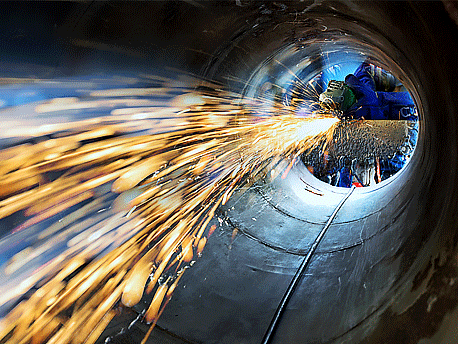
Pipelines, culverts and service tunnels are out of sight by design — which is exactly why defects tend to develop unnoticed. Capacity reduces long before it “fails”; joints open, debris and silt settle, abrasion exposes substrate, and infiltration starts to undermine the structure and surrounding ground. Raven Rope Access supports confined space inspection and targeted maintenance on enclosed flow routes and access tunnels, giving asset owners clear evidence of condition and practical actions to restore serviceability.

Evidence-led inspection and maintenance for enclosed infrastructure.
Buried and enclosed routes can hide problems until they become disruptive — silt build-up, joint movement, internal corrosion, abrasion and local collapse. We carry out condition checks and targeted maintenance in culverts, tunnels and pipe runs, using appropriate access methods to reach tight sections and awkward invert areas. You get clear findings and photo evidence to support decisions on cleaning, repair priorities and longer-term remediation — without relying on assumptions.
Pipelines, culverts and service tunnels are out of sight by design — which is exactly why defects tend to develop unnoticed. Capacity reduces long before it “fails”; joints open, debris and silt settle, abrasion exposes substrate, and infiltration starts to undermine the structure and surrounding ground. Raven Rope Access supports confined space inspection and targeted maintenance on enclosed flow routes and access tunnels, giving asset owners clear evidence of condition and practical actions to restore serviceability.
Typical tasks
- Confined space man-entry inspections with structured photo records and defect notes
- Remote inspection support coordination (CCTV/ROV/sonar where appropriate to the asset)
- Silt/debris assessment, localised clearance and obstruction removal (within scope)
- Condition checks at joints, inverts, headwalls/outfalls and interface zones
- Infiltration tracing and defect marking/measurement to support repair planning
- Minor repairs to access features (ladders, brackets, fixings, handholds, guards)
- Surface preparation and interface preparation for specialist lining/civils packages
Assets & locations
- Drainage culverts (pipe, box and arch), headwalls and outfalls
- Large-diameter pipelines and enclosed channels
- Under-road / under-rail crossings and restricted-access runs
- Service tunnels, utility corridors and access adits
- Intake/outfall structures, chambers, valve pits and shafts
- Coastal/harbour drainage routes where tide and backflow can affect access
Planning, permits & safety
Work is planned around the safe operating reality of the asset — flow conditions, isolation states, access/egress routes, and any required diversion or over-pumping arrangements. Where man-entry is required, we operate under a confined space safe system of work with entry control, atmospheric testing, ventilation and reliable communications in place before entry, and we treat flooding/backflow potential as a primary hazard throughout. Rescue arrangements are defined and ready (not assumed), and the work is coordinated with your permit office and any SIMOPS on site so inspection and any targeted maintenance can progress without creating additional risk. Close-out is clear and traceable: what sections were accessed, what was observed, what was completed, and what actions are recommended next.
Arrange a culvert, tunnel or pipeline inspection plan
If you’re dealing with flow restriction, repeated blockages, leakage/infiltration, or condition concerns on an enclosed route, we can support with a controlled inspection and maintenance approach. We’ll align with your permit system and operational constraints, propose the most suitable inspection method (remote and/or man-entry), and provide clear, usable outputs for maintenance planning and any follow-on repair scopes.