Brickwork & Pointing Work
Deteriorated pointing and loose masonry at height can quickly become a water-ingress and falling-debris risk — especially on exposed elevations and coastal buildings. We deliver brickwork repairs and repointing by rope access, giving direct access to chimney stacks, parapets, gables and high façades without the disruption of full scaffold builds. The focus is on safe access, tidy workmanship and a clear close-out record of what was repaired and what should be monitored.
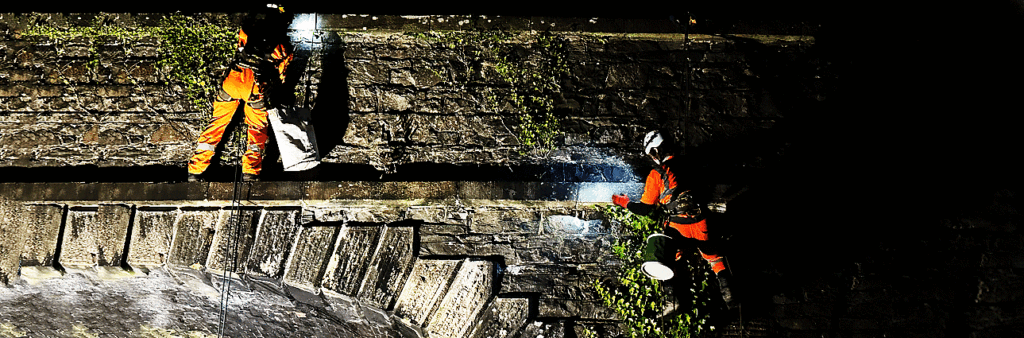
Targeted masonry repairs where access is the challenge
We tackle the failures that let water in and drive decay — open joints, cracked or spalled brickwork, loose copings, failed sealant lines and tired movement joints. Repairs are matched to the building fabric where needed, with careful preparation and a durable finish suited to exposed elevations. Rope access keeps disruption low while allowing close, controlled work on awkward façades and returns.
Brickwork rarely fails evenly. Weathering and movement tend to open joints at corners, parapets, copings, chimney shoulders and under exposed ledges. Once mortar breaks down, water tracks behind the face, frost damage accelerates, and staining and spalling follow. Rope access allows our technicians to work directly at the defect locations, remove loose material, reinstate joints and complete local brick repairs without the heavy footprint of scaffold — particularly useful where access is restricted, over roofs, above entrances or over public areas.
We scope repairs so they are practical and defensible: identify loose units and failed joints, agree repair boundaries, rake out and repoint to the appropriate depth, and reinstate finishes neatly so water shedding and appearance are restored. Where heritage or sensitive masonry is involved, methods can be adjusted to suit the substrate and existing mortar profile, keeping intervention conservative and compatible with the building fabric.
Rope access is planned and executed as a complete system, with competent supervision, controlled exclusion zones and a workable rescue arrangement in line with IRATA good practice and the IRATA ICOP principles.
Typical tasks
- Repointing of façades, parapets, gables and chimney stacks
- Raking out and reinstatement of failed mortar joints (agreed profile/finish)
- Local brick replacement and make-good repairs where units are spalled or loose
- Repairs around copings, sills, string courses and water-shedding details
- Making safe loose masonry and minor debris removal (within scope)
- Local sealing/mastic works at interfaces (where appropriate and agreed)
- Photo-backed close-out notes and defect tracking for planned maintenance
Assets & locations
- Industrial and commercial buildings with high brick elevations
- Warehouses, stair towers, plant rooms and service cores
- Residential blocks, hotels and mixed-use developments
- Coastal/harbour buildings exposed to wind-driven rain and salt
- Chimneys, parapets, boundary walls and high gables
- Sites with restricted access where MEWPs/scaffold are disruptive
Planning, permits & safety
Masonry work at height is planned with disciplined falling-object controls, practical exclusion zones and clear interface management around entrances, roads and public areas. Rope access is delivered under IRATA good practice using two-rope protection (working line plus safety line) and a site-specific rescue plan that remains workable as the workfront moves. Materials and debris are managed carefully to maintain housekeeping and prevent loose mortar or tools creating hazards below, and close-out records are provided so repairs can be signed off and monitored over time.
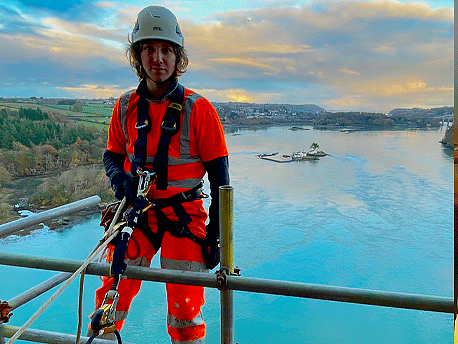
Arrange brickwork and pointing repairs at height
If you have failing mortar joints, loose brickwork, water ingress points or exposed masonry defects that need addressing safely at height, we can support with rope access repairs planned around your site constraints. We’ll agree repair boundaries and finishes up front, then deliver a tidy repair with a clear close-out record for your maintenance file.