Ship Hull & Superstructure Inspections
Marine assets take their punishment in predictable areas — topsides in the splash zone, fasteners and brackets that trap moisture, and high-level features that never get a proper look because access is awkward. Raven Rope Access provides rope access support for hull and superstructure inspections on vessels alongside, helping you get reliable condition information quickly, without turning a short inspection into a major access build.
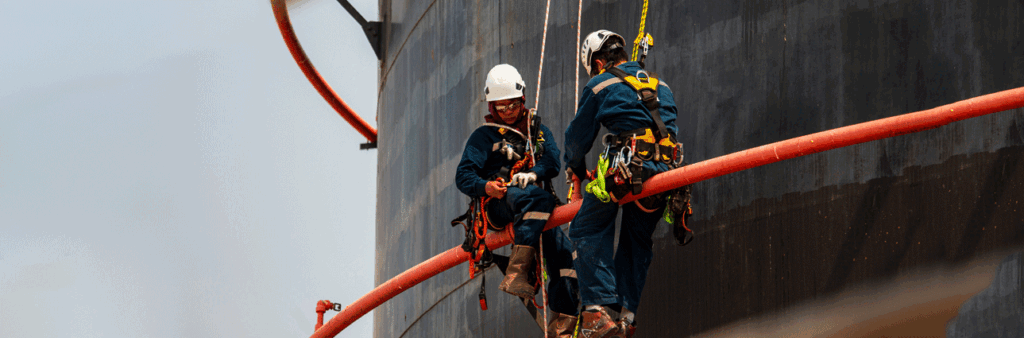
Inspection access that delivers clear evidence and practical next steps.
Berth time is expensive and inspection windows are tight. We provide close-up access to hull and topside areas without scaffold delays — capturing clear photos, defect notes and key measurement points so you can prioritise repairs and keep the programme moving. All work is coordinated around your PTW/SIMOPS controls and dockside activity.
When a vessel is in port, time is tight and priorities move fast. The risk is that inspections become “from the deck and binoculars”, and the early warning signs get missed: coating breakdown at edges and welds, corrosion at fittings and penetrations, damaged rail sections, loose brackets, water tracking around joints, impact marks near fender lines, and deterioration around platforms and ladders.
Our job is to solve the access problem so the inspection can be done properly. Using rope access, we can position technicians directly at the inspection points to capture clear photos, record defect locations accurately, and build a straightforward defect register that your technical team can action. Where you have a surveyor, competent person, or class/inspection provider attending, we support them with safe access and efficient coverage of agreed areas. For below-waterline requirements, we can coordinate alongside your dive team or dock plan — our focus is the above-waterline hull, topsides and superstructure where rope access adds the most value during port calls.
Typical tasks
- Above-waterline hull and topsides inspection support (plating condition, coatings, fittings)
- Superstructure surveys: decks, bulkheads, bulwarks, handrails, ladders and access runs
- Checks of brackets, guards, supports, penetrations and “water trap” details
- Condition observations around fender contact zones, shell doors and landing areas (as applicable)
- High-level inspection access to masts, platforms, davits, cranes and associated structures (scope-dependent)
- Photo reporting with clear location notes and prioritised defect lists
- Post-work verification inspections after repairs/coating touch-ups during a port window
Assets & locations
- Ferries, RO-RO vessels and workboats alongside
- Cargo vessels and coastal shipping in port
- Marine plant and service craft requiring rapid condition checks
- Port berths, terminals and quays with restricted access footprints
- Over-water elevations and awkward faces where scaffold/MEWPs are impractical
- Drydock support inspections (above-waterline and superstructure) where scheduled
Planning, safety & control
Vessel inspections involve live interfaces — gangway routes, berth traffic, wind/tide effects, and simultaneous operations. We plan access around the vessel’s operating constraints and port controls, establish sensible exclusion zones, and keep tool management disciplined to minimise dropped-object risk. The inspection scope and reporting format are agreed up front so the output is consistent, auditable, and easy for your technical team to use during defect close-out or maintenance planning.
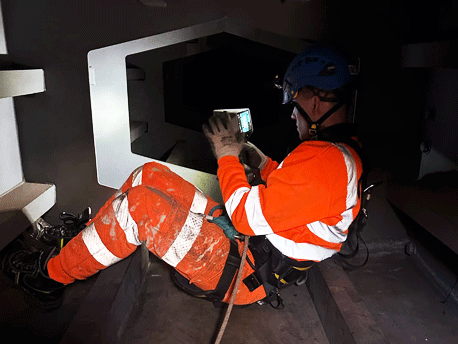
Arrange vessel inspection access support
If you have a planned port call inspection, condition concerns, or a snag list that needs verifying before departure, we can provide rope access support to help you cover the right areas efficiently. Share the vessel type, berth location, inspection priorities, and any permit/SIMOPS constraints — and we’ll propose a practical access approach that fits your window.